
Electromagnetic interference (EMI) – also known as electromagnetic disturbances – can compromise the normal operation of electronic devices, causing signal errors or systems freezers. In today’s industrial landscape, EMI represents a significant challenge.
This article takes a technical deep dive into the phenomenon to better understand its implications.
Causes of electromagnetic interference
Sources of electromagnetic disturbances are classified into two categories: internal and external.
- External Sources: these include radio waves, RF signals, lightning strikes and other environmental electromagnetic events
- Internal Sources: these originate from electronic components, motors, switching power supplies or electrostatic discharges (ESD)
In industrial settings, high-power equipment is the primary culprit. Key sources include:
- Heavy Machinery: electric motors, spot and arc welders and industrial furnaces (sources of powerful electromagnetic fields)
- Automation Systems and VFDs: Variable Frequency Drives used for motor speed control generate high-frequency noise due to transistor switching
- Electrical Loads: connecting or disconnecting large loads can cause voltage fluctuations and disturbances across the power grid
- Internal Crosstalk: every electrical circuit generates electric and magnetic fields that can interfere with neighboring components within the same device
Consequences and Risks
The consequences of EMI vary in severity. Critical malfunctions can lead to errors in control and monitoring systems or sudden production line shutdowns. Common symptoms include devices freezing, transmitting incomplete data or interfering with other products in shared environments.
Furthermore, these interferences pose a serious safety risk. For instance, EMI can affect alarm systems or the control units of hazardous processes. This jeopardizes operator safety, a critical concern in Industry 4.0 environments where human-machine collaboration is standard.
Mitigation solutions and strategies
Several strategies exist to effectively counter EMI. For industrial equipment, which must meet rigorous standards such as IEC 61000, the most effective solution is Electromagnetic Compatibility (EMC) testing.
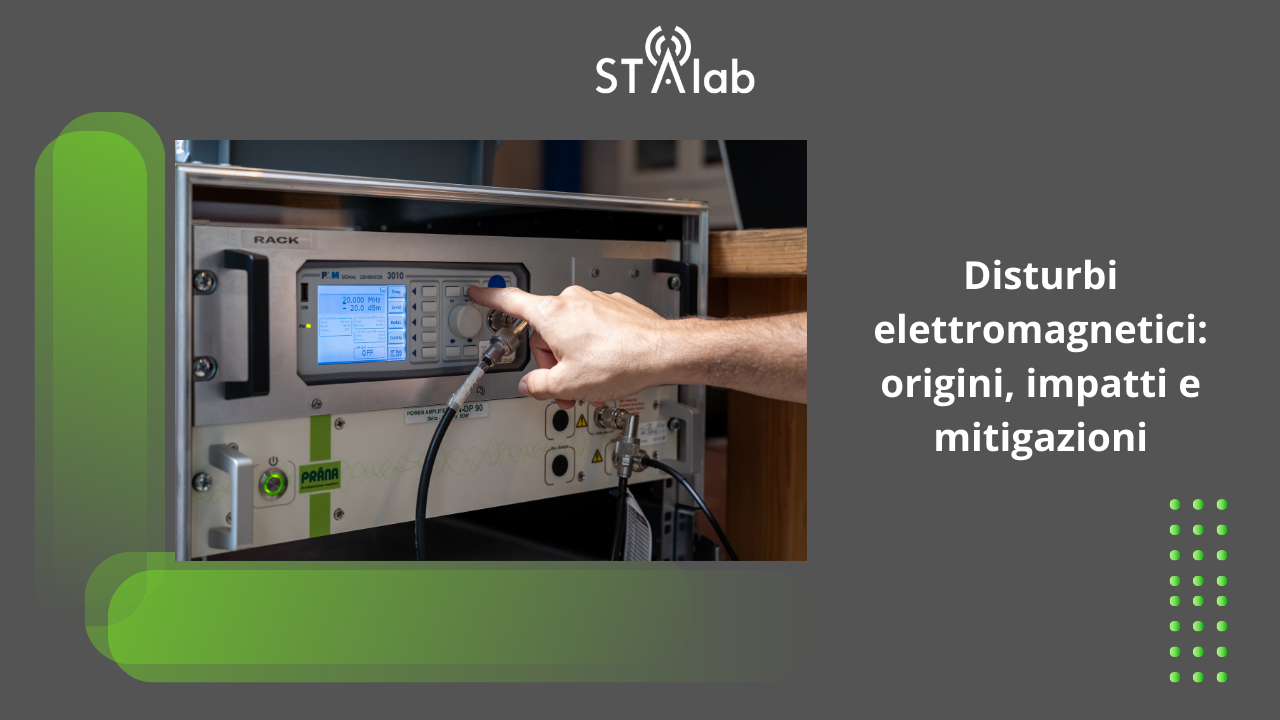
Electromagnetic compatibility (EMC) testing
EMC testing is the technical bridge to managing disturbances by verifying both device’s emissions and its immunity. In short, it confirms that a device does not emit excessive interference and is resilient to external disturbances.
Core EMC tests include:
- Radiated Emissions: measuring interference radiated by the device into the environment
- Conducted Emissions: measuring disturbances emitted through power lines or connection cables
- Radiated immunity: verifying if the device operate correctly when subjected to radiated electromagnetic stimuli
- Conducted immunity: testing resilience to interference conducted through cables or power lines
- Specialized Tests: ESD (Electrostatic Discharge), burst, surge, harmonics, flicker and voltage variations
Why EMC testing is essential
There are several reasons to prioritize EMC testing during the machine design phase:
- Operational Reliability: testing ensures the machinery functions without glitches caused by internal or external noise
- Safety: reliability is paramount for critical devices, such as medical equipment or safety-rated industrial controls
- Regulatory compliance: EMC testing is mandatory in most markets. For example, the Directive 2014/30/EU requires product to be immune to disturbances to obtain the CE Marking
The importance of prevention
È cruciale preventivare questi test e non effettuarli solo quando c’è necessità o urgenza in seguito al verificarsi di un problema. Quando si pianifica il budget di progettazione della macchina, è importante inserire anche questi test, in modo da risolvere l’eventuale problema all’origine e non ritrovarsi con delle brutte sorprese all’ultimo.
It is crucial to budget for these tests proactively rather than performing them as an emergency response to a failure. Integrating EMC testing into the initial design budget allows you to resolve issues at the source, avoiding costly “last-minute surprises” or product recalls.
Electromagnetic interference is an unavoidable challenge in modern industrial environments. It can cause malfunctions, compromise safety and lead to significant financial losses.
Understanding the causes, evaluating the effects and adopting mitigation measures – such as shielding, filtering or software solutions, is vital. EMC testing is the key technical step to ensuring equipment is reliable, safe and compliant. It should be considered a core part of the early design stages.

